Dealers are looking to move inventory to make way for new models. Consumers have one other advantage: Americans are keeping their cars longer, and that means fewer total buyers with lots of new vehicles to choose from.
Monday, 31 December 2012

Friday, 21 December 2012
Drought, Economics And Your Holiday Feast
Think your prime rib holiday dinner is more pricey this year? You're right. But maybe not for the reason you think.
Todd Patterson/iStockphoto.com Think your prime rib holiday dinner is more pricey this year? You're right. But maybe not for the reason you think.Todd Patterson/iStockphoto.com
 Nobody really wants to think about economics, the famously dismal science, while sitting down at a table loaded with love and calories. Like it or not, though, supply and demand drive food production and set the price of dinner.
So, in a season of feasts, what are the business stories on your holiday menu?
The big one is last summer's drought and its slow, rolling impact on food prices. If you recall, the Midwest suffered through one of the worst droughts in half a century. Corn yields fell to a level last seen in the mid-1990s. With corn in short supply, prices for animal feed spiked. There were predictions that pork, poultry and beef producers would go out of business, and consumers would see a shortage of meat.
So far, most of those fears have not come true. Poultry and pork producers seem to be riding out the crisis. Data collected by the U.S. Department of Agriculture don't show any major cutback in production, and prices are stable — although that still could change in a few months.
Beef prices, on the other hand, did hit new records in November. But industry economists say you can't blame the great drought of 2012. It's too soon. The cycle of beef production, from breeding to slaughter, takes so long that today's prices reflect decisions that beef producers made a couple of years ago. According to Steve Meyer, president of Paragon Economics, we're paying more for beef today because of two things: a drought in 2011 that hit Texas and Oklahoma, and a long-term rise in corn prices that began back in 2008. Considering these time lags, it's quite likely that this year's drought will influence the supply (and price) of beef for at least another year or two.
If you're pulling out butter and milk for baking, though, or laying out a spread of cheese, you're getting closer to the drought's real impact. High feed prices have hit dairies hard, especially in California. Many milk producers are sending cows to slaughter, milk production is falling, and prices are rising.
Yet even here, economic forces push in complicated ways, and the drought is only part of the picture. Dairy prices aren't much higher than last year, but for different reasons. Last year, it was because of rising demand, in foreign markets, for U.S. cheese. This year, it's because U.S. farmers are going out of business.
It would be too bad to end on such a dreary note, so let's turn our attention briefly to another holiday staple that's making a stirring comeback: sweet potatoes.
U.S. consumption of sweet potatoes hit an all-time high way, way, back in the 1930s, then went into a long, slow decline, bottoming out in the 1980s. But now the sweet potato is back. Americans are eating twice as much of this vegetable as they were 20 years ago. The reason? Sweet potato fries. This vegetable is no longer just a holiday staple; it's claimed a spot in the real centerpiece of the American diet: the snack.
For more on the traditions and costs of our favorite holiday foods, check out my radio story by clicking on the listen link above.
Thursday, 20 December 2012
From Shoes To M&M's, Custom-Made Products Take Off Online
High school student Jon Ledbetter designs his own "NikeiD" sneakers. Ledbetter can post his designs on Nike's website, where other shoppers can also order them.
Kathy Lohr/NPRIt wasn't long ago that all consumers went to retail stores to buy things. These days, of course, you can get just about anything online. Some companies are now taking that shopping experience to the next level, allowing customers to design almost anything individually — from a trench coat to a batch of M&M's.
Lindsay Stewart, a senior at Holy Innocents' Episcopal School in Atlanta, is a Converse fan — and an avid Converse custom designer. Converse, like Nike, offers sneakers that customers can customize, mixing colors and patterns to bring their ideas to life.
"You can do half of the shoe stars and [the] other half is still simply white," Stewart says, showing off her design. "You can incorporate the color you specifically want so it can easily match your outfits."
Walking Advertisements
Stewart has designed three pairs this year: one with a star pattern, another for the Fourth of July and a neon mix she made for a party.
"Students really love showing off, and kids love showing off who they are," Stewart says. "And ... me spreading the word about how I designed these shoes led to all my friends wanting to design their own."
That's just what retailers are hoping for — getting customers involved and having them tell others about their experience.
The only drawback may be the cost. These custom-designed shoes are about 20 to 25 percent more expensive, depending on the design.
Customization started with computers more than a decade ago. Now, you can create your own T-shirts, jeans and custom-blend cosmetics.
Some luxury brands are getting involved, too. On the Burberry Bespoke website, it's hard not to be seduced by the elegant tune playing under close-ups of hand-sewn fabric and old-world charm. Burberry allows customers to create their own trench coats, but they start at more than $2,000 — and no returns are allowed.
And at Prada and Louis Vuitton, you can make your own handbags and shoes with limited options to preserve their high-end designer look.
M&M's lets customers create their own mix by choosing colors and even adding personalized photos and messages.
MyMMs.com screengrab M&M's lets customers create their own mix by choosing colors and even adding personalized photos and messages.MyMMs.com screengrab
 Building Brand Loyalty
"It really helps build a relationship with their customers," says Ann Marie Fiore, a professor of apparel at Iowa State University. "You're always looking at building that brand loyalty."
Fiore says companies face extra upfront costs in setting up the customization process. On the other hand, they save on product development costs because consumers are doing that for them and they don't have to store big inventories.
Fiore says one of the biggest growth areas is food. A site called Chocomize, for example, lets you create your own gourmet chocolate bars by adding fruits, nuts and even sugared rose petals.
"I can see this as being something that's really attractive, where people feel more confident about their choices," Fiore says. "And there's not so much risk. So you're not paying $425 for a pair of shoes, you're paying $8 for a candy bar."
Fiore predicts that all means customization will only continue to grow for a variety of products.
M&M's is already doing it. You can choose your own colors, add designs and even have your own photo printed on the tiny candies.
I ordered my own Christmas-colored mix with a snowman print, chose expedited shipping and had my package two days later. They're exactly what I ordered, but the cost is four times higher than if I'd bought traditional M&M's at a store. And shipping is extra, too.
Creating Your 'Perfect Expression'
Dan Michael, research and development director for Mars Retail Group, which makes M&M's, says it took the company about three years to develop its customization process. He says the company gets about half a million orders a year, with weddings and birthdays as the biggest draw.
"The candy certainly serves as ... a blank canvas for our customers to create their perfect expression," Michael says.
Back at Holy Innocents' High School, student Jon Ledbetter says personalizing clothes and shoes is fun for him and for lots of young people. He plays basketball and has designed about a dozen pairs of "NikeiD" sneakers, including one featuring the school's crimson and gold colors.
"People are like, 'Where did you get those from, where did you get those from?' I made 'em so you can't get them anywhere else," Ledbetter says and laughs. "They're mine. They're my creation."
Ledbetter can post the shoes he made on Nike's website, where others can comment or even order his design.
Two German professors have documented some 500 international mass-customization sites and the number is growing.
Forget The Register: Stores Use Mobile To Make Sales On The Spot
A Nordstrom salesperson shows a customer an online selection of shoes on an in-store iPad. Like some other retailers, Nordstrom is using mobile devices to make on-the-spot sales and check companywide product inventory instantly.
Courtesy of Nordstrom A Nordstrom salesperson shows a customer an online selection of shoes on an in-store iPad. Like some other retailers, Nordstrom is using mobile devices to make on-the-spot sales and check companywide product inventory instantly.Courtesy of Nordstrom
 The women's shoe department at Nordstrom's flagship store in Seattle is bustling. Shoppers are trying on everything from stilettos to rain boots — and when they're ready to buy, they can pay up right where they are.
The sales associate simply whips out a modified iPod Touch and scans the shoe box's bar code. The handheld device contains a credit card reader, too, so the customer can just hand over the plastic and sign with a fingertip. There's no trek to the cash register and no line to wait in.
At department stores like Nordstrom and at other traditional retailers, mobile devices are slowly beginning to supplement, and even replace, other methods of payment. In many cases, buying something is becoming more efficient and more personal.
No More 'Clunky' Cash Registers
"We think the days of the big clunky cash register ... anchoring down a department are really going away," says Colin Johnson, public relations director for Nordstrom.
"We are always going to have a place for the cash and we'll certainly take care of however the customer wants to pay," Johnson says. "But we do see the future as essentially completely mobile."
Mobile payments certainly make shopping easier. And while customers like it, retailers benefit, too. When shoppers pay on the spot, they don't have time to change their mind and decide they don't really need what they are about to buy.
In addition to boosting sales, mobile technology is often less expensive than the old-fashioned kind. And removing cash registers also frees up valuable real estate inside the store, say industry experts like Brian Brunk of Boston Retail Partners.
"There isn't a retailer we talk to that isn't embracing at least a blended, if not an 'all-in,' approach to mobile point-of-sale," Brunk says.
More stores are processing instant payments using mobile devices, enabling customers to bypass the checkout counter.
Courtesy of Nordstrom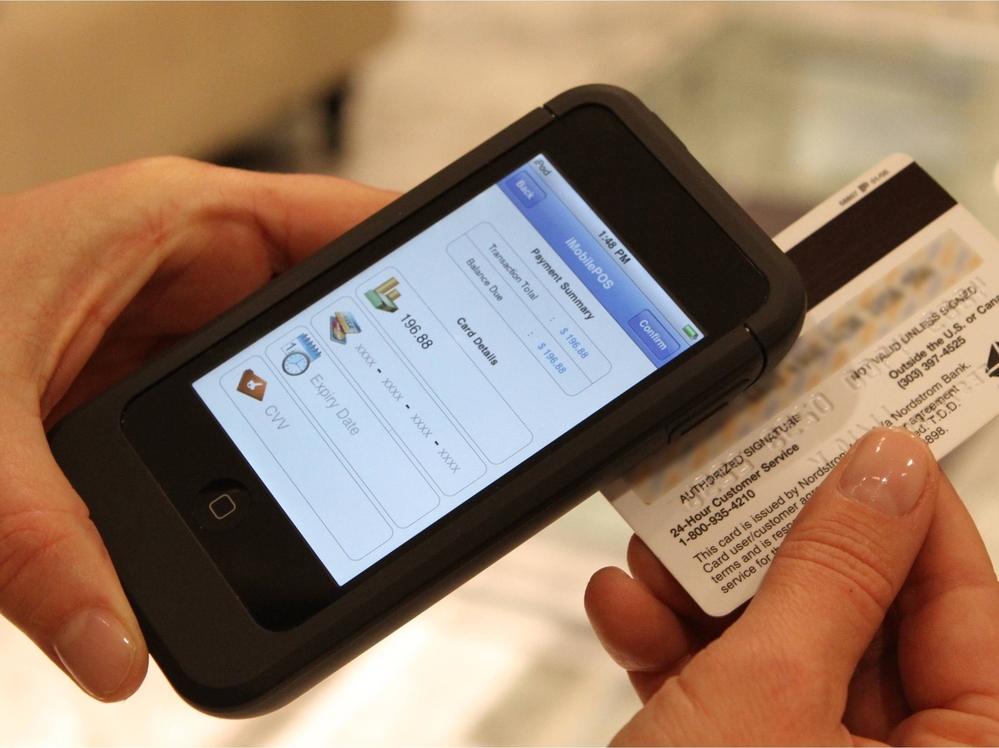 More stores are processing instant payments using mobile devices, enabling customers to bypass the checkout counter.Courtesy of Nordstrom
 But the changes taking place in retail go well beyond checking out via handheld device, he adds.
"You have to embrace the online — the digital world," Brunk says. "It's really now, how are you going to blend those two together? Because that's what the customer is really expecting."
Getting Goods To Customers Who Want Them
Take inventory, for example. It wasn't all that long ago, says Nordstrom's Colin Johnson, that customers found it charming when a clerk called around to different stores in search of an out-of-stock item.
But "those days are long gone," Johnson says. "You've got to be rapid, you've got to be on the spot. You have to have that information at your fingertips."
Or, more precisely, on an iPod — which is how shopper Amidy Doolittle purchased some glittery flats and a pair of suede shoes. "I just had [the clerk] order some shoes that weren't available in the store," Doolittle explains. "He looked them up on his mobile device, and I paid sitting right here in my chair."
What's most remarkable about Doolittle's purchase is that the sales clerk had access to Nordstrom's entire companywide inventory on his device.
While that might sound pretty basic to many shoppers, Kasey Lobaugh, a retail expert at Deloitte Consulting, says some retailers have struggled to integrate inventories of in-store and online products.
All too often, Lobaugh says, shoppers would be told their desired item was out of stock, when the retailer did, in fact, have the goods.
And in another plus for retailers, he says, "If you are able to fulfill the item from the place where the items are turning the slowest, you're able to decrease the markdowns that you have to take" if you were to sell that item at its original location.
In other words, winter jackets languishing in a Florida store can be quickly shipped to a Seattle shopper — and sold at full price.
Embracing 'Showrooming'
Yet another change under way relates to something you see all the time: the practice known as "showrooming." Increasingly, customers with smartphones are checking out products and competitors' prices online as they roam the aisles of brick-and-mortar stores.
Early on, Lobaugh says, some retailers were unhappy about the trend and weren't keen to embrace it.
But "our data would say don't resist it," Lobaugh notes. "Give them the capability. Enable Wi-Fi in your store so that the consumer can access more information, because the conversion rate goes up," he says — meaning, smartphone-toting customers who do research on the sales floor are actually much more likely to make a purchase.
And by 2016, Deloitte projects, roughly one in five consumers will be using their smartphones in precisely that way.
Looming Spending Cuts Would Hit Hard All Over
Alan Krueger, chairman of the president's Council of Economic Advisers, warns that consumer spending will drop if Congress and the White House fail to reach a deal on spending cuts and tax increases.
Jewel Samad/AFP/Getty Images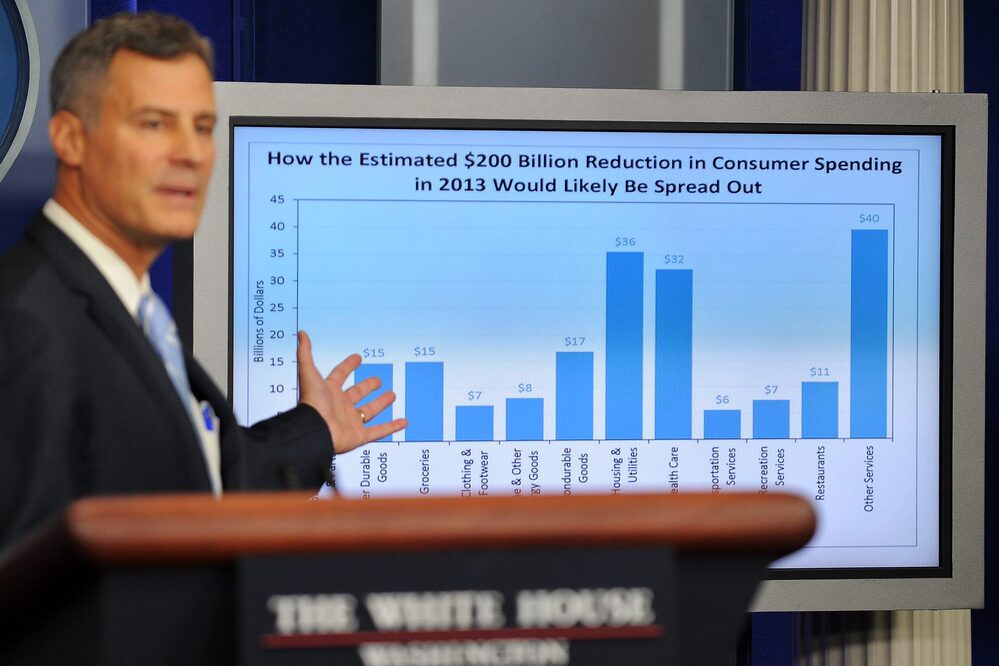 Alan Krueger, chairman of the president's Council of Economic Advisers, warns that consumer spending will drop if Congress and the White House fail to reach a deal on spending cuts and tax increases.Jewel Samad/AFP/Getty Images
 Tax increases are only a part of what lies ahead if Congress can't come to an agreement to avert the fiscal cliff by the new year. Massive spending cuts will also kick in — and those cuts will be felt throughout the economy.
The current stalemate got under way two years ago when Congress, locked in a bitter partisan battle over whether to extend the George W. Bush-era tax cuts, passed what was known as the Budget Control Act of 2011.
If Congress couldn't resolve its spending battles by the end of 2012, the law said, there would be what are called "sequester cuts" — automatic, massive reductions in nearly every part of the budget.
Across-The-Board Cuts
Cary Leahey, senior adviser with the consulting group Decision Economics, says the cuts affect both good programs and bad.
"Each particular program which would be affected would all be cut pretty much by the same percentage amount," Leahey says. "And it would not be done rationally — it would just be done that you cut all programs the same."
Altogether, the cuts would eliminate more than $110 billion in federal spending in 2013 alone. Nearly half of that would be in defense spending. But there would also be cuts in education, health care and law enforcement. Much of that money goes to the states in the form of grants.
"State budget officers and policymakers have already had to make a series of really serious decisions on balancing their budgets," says Ingrid Schroeder, director of the Fiscal Analysis Initiative at the Pew Center on the States. "This is going to add a whole other layer of complexity to some already tough decisions that they've made."
'You're Going To Feel It'
Schroeder says states like Virginia and Maryland, which depend heavily on federal spending, will take a hit, as will states with a strong military presence, like Hawaii. Former Federal Reserve Vice Chairman Alan Blinder says cuts in defense spending have a way of spilling over into the rest of the economy.
"If you run a business near a military base — a cafe, a grocery store, a bowling alley ... a restaurant, anything — and the military base has meaningful cutbacks in spending, you're going to feel it as a civilian," Blinder says.
But even without this kind of spillover effect, Blinder says the looming sequester cuts will slow the economy at a time when it's already weak. He says the cuts could reduce economic activity by anywhere from 0.7 percent to 1 percent.
And a 1 percent reduction in economic activity, he says, means about a 1 percent cut in the labor market.
"And 1 percent of employment in the United States now is roughly 1.3 million jobs," Blinder says. "That's not good."
A Little 'Wiggle Room'
Blinder notes that the cuts won't necessarily happen right away; the government, he says, has some wiggle room about when it implements them. So if the two sides are close to an agreement on Jan. 1, they can stall a bit. But he also says the window for solving the dispute is closing.
"My judgment would be that if this is not settled by the second half of January, we're going to feel severe effects on the economy."
And there are signs the effects are already being felt. Leahey, of Decision Economics, says companies need time to plan when they bring in new people — and that they may already be holding back on hiring in anticipation of the cuts.
"So if the numbers for this Friday's employment report are dismal, it may not be [due to Hurricane Sandy] — it may be preparing for these sequester cuts," Leahey says.
All of this will be happening at a time when consumers are already feeling the bite from higher taxes — and that could be an even bigger problem for the economy.
Why Not Raise Capital Gains Taxes?
As a part of the series, "Why Not," Tell Me More is looking at policies that were once untouchable but now may be on the table. Today, NPR Correspondent Tamara Keith and Emory Law Professor Dorothy Brown dig into the pros-and-cons of raising taxes on capital gains and dividends.
Copyright © 2012 National Public Radio. For personal, noncommercial use only. See Terms of Use. For other uses, prior permission required.MICHEL MARTIN, HOST:
Switching gears, we're going to turn now to some economic news. The clock is winding down for the president and Congress to reach a decision on the nation's budget before the automatic spending cuts and tax hikes known as the fiscal cliff come into play. Over the weekend, there were some signs of movement. The Speaker of the House John Boehner offered to accept a tax rate increase for Americans making more than $1 million a year, and negotiations are continuing.
We have been taking a look at items that used to be considered untouchable, but may now be up for grabs because of the severity of the circumstance facing the country. We're calling the series Why Not? And today, we're going to ask: Why not change the law taxing capital gains and dividends?
With us now is NPR congressional reporter Tamara Keith. Joining us once again is Dorothy Brown. She's a professor of law at Emory University.
Tamara, Dorothy Brown, welcome back. Thanks for joining us once again.
TAMARA KEITH, BYLINE: Glad to be with you.
DOROTHY BROWN: Thank you.
MARTIN: Tamara, I'm going to start with you. Let's keep it simple. What are capital gains and what are dividends?
KEITH: OK. So capital gains are - that would be the tax that you pay when you sell a stock and you realize a gain. Or, say, you sell a business. Like, for instance, George Lucas sold Lucasfilm this year for something like $4 billion. He would be taxed on that capital gain.
MARTIN: So the profit that you make on selling something of value.
KEITH: Right, like a business or a stock...
MARTIN: Is a capital gain.
KEITH: ...is a capital gain.
MARTIN: And what's a dividend?
KEITH: A dividend is a way that companies share their profits with their shareholders. So if you own a stock of, say, share of stock in McDonald's or Wal-Mart or something like that, at some point during the year or several points during the year, they may say, well, for every share you own, we're going to give you $1.50 or whatever it is. For instance if you owned Wal-Mart stock this year, you would get $1.59 for every share you own, and that's your dividend.
MARTIN: OK, so we're going to get into some of the specifics of the proposals on the table in a minute, but I did want to ask whether the tax treatment of capital gains and dividends has been considered untouchable in the same way as, you know, we've talked about things like Social Security, we talked about things like the mortgage interest tax deduction and the tax treatment of those has gone back for decades.
And so people kind of consider it a settled issue. The tax treatment of capital gains and dividends isn't quite like that, is it?
KEITH: It's been changing throughout history, basically. Often capital gains have had sort of a preferred status in the tax code because it rewards investment is the idea. But dividends have long been taxed, until very recently, just like ordinary income, just like the money you'd get from your wages.
MARTIN: So what are some of the proposals on the table?
KEITH: Let's go through the three sort of scenarios here. One would be if we go off the cliff. If we go off the cliff, then taxes would rise on both capital gains and dividends. For capital gains it would go up to either 10 percent or 20 percent, depending on your income level. And for dividends it would go from being taxed at this 15 percent rate, where it currently is, to being taxed as ordinary income.
So if you are a very high-income person, suddenly it could go from being taxed at 15 percent to being taxed at 39.6 percent.
MARTIN: So Professor Brown, let's turn to you. As you can hear from what Tamara just told us, the rates that capital gains and dividends are currently taxed is a lot lower than ordinary income. So why not let these tax rates expire? Why not raise these rates? What are the arguments?
BROWN: Well, when we talk about millionaires paying more, capital gains are found disproportionately in millionaire households. That said, we can talk about why you might have a different rate. One is we want to encourage risk-taking. And when you invest in the stock market, it is a risk. You could actually lose all of your money.
You could also make a lot of money, see, e.g., Warren Buffett and others. So one reason for the rate differential is the risk. We want to reward that. Another one is that part of the gain when you sell stock isn't just because the company has done better. It's done better - well, it's not necessarily done better, but there could be a part allocable to inflation, and it isn't fair to tax you at a higher rate because inflation is the reason for the additional income that's earned. So...
MARTIN: So tell us why you think it's OK to let these rates rise and why you think in fact in your opinion you think it's absolutely the right thing to do.
BROWN: OK, well, it's the reason or the primary reason why Warren Buffett pays less in taxes than his secretary. It is because the lion's share of his income and the lion's share of millionaires' income comes from dividends and capital gains that are taxed at a 15-percent rate, whereas wage earners are taxed at 35 percent currently, and it could be as high as 39.6 percent beginning January 1 of next year.
So I say right now there's discrimination against labor, against wage earners in the code because there's this preferential low rate given to capital gains.
MARTIN: If you're just joining us, you're listening to TELL ME MORE from NPR News. I'm Michel Martin. And we're looking at how taxes on capital gains and dividends could change with Emory law professor Dorothy Brown, that's who was speaking just now, and NPR congressional reporter Tamara Keith.
Now Tamara, you might think that the politics of this would be easy because you're talking about, as Professor Brown said, a relatively small group of people relative to the total population. But it has not been that way. Why is that?
KEITH: Now that's a good question. You know, one idea, and this is just spit-balling here, is that actually members of Congress own a lot of stock, have a lot of investments. And so it's part of this Washington bubble phenomena, where people in Congress don't have a sense of what mainstream America is going through or where they get their money from.
Another thing is that there is a very vocal constituency arguing that these rates should stay where they are. Included in that is the business community, which has a very loud voice.
MARTIN: I'd like to ask you, Professor Brown, you wanted to answer this question of why do you think the debate over this is so difficult. Is it that - do most people feel that they have some investment in capital gains and dividends, and it would affect them, even if it wouldn't affect them directly in the near term? What do you think?
BROWN: Great question. I think - half of Americans own stock, but they own it in their retirement accounts, which are not eligible for the 15-percent rate. So when people hear oh, we're going to increase the gain on - the tax treatment on stocks, they think oh no, this is going to hurt me. It really isn't because you're not benefitting from the low rate if you have it in your pension accounts.
I wanted to go back to something Tamara said. Members of Congress are not required to release their tax returns. I made the argument in a Bloomberg View op-ed that they should be, that in fact when I did a back-of-the-envelope calculation, about nine in 10 senators own stock in a way making them eligible for the 15-percent rate. Compare that with less than one in five Americans.
So I think the first step to tax reform, whether it's taxing wages at the same rate as capital gains, is letting us look at members of Congress' tax returns because I think we'd see that they really are not like the typical Americans' tax returns.
MARTIN: Tamara?
KEITH: And we get sort of a window to that by look at their annual financial disclosures, where they have to report their assets, but it's in a big range, and you just don't really get as complete a sense.
MARTIN: Where is this debate going? Do you find that there seems to be more interest in addressing this issue given the big package of discussions that's going on? I know it's hard to see from the outside just because these discussions are taking place behind closed doors.
KEITH: Well, and this is one of those things that is not as high-profile as many of the other issues that are being discussed. I mean, top tax rates, that's the big, sexy item that everybody is paying attention to, the income tax rate. This is something that doesn't get as much attention.
I will say that given that both Republicans in Congress and the president want to extend these preferential rates for virtually everyone, most of our listeners will most likely be just fine after the new year if either the president or Republicans in Congress get their way.
If the president gets his way, people at the very high level, people earning more than $250,000 a year, could see these rates rise. But generally speaking, unless we go over the cliff, most people are not going to see any change.
MARTIN: Tamara Keith covers Congress for NPR. She was here with me in our Washington, D.C., studios. Emory law professor Dorothy Brown was with us from Martha's Vineyard, Massachusetts. Thank you both so much for speaking with us.
KEITH: Thank you.
BROWN: Thank you.
Copyright © 2012 National Public Radio. All rights reserved. No quotes from the materials contained herein may be used in any media without attribution to National Public Radio. This transcript is provided for personal, noncommercial use only, pursuant to our Terms of Use. Any other use requires NPR's prior permission. Visit our permissions page for further information.NPR transcripts are created on a rush deadline by a contractor for NPR, and accuracy and availability may vary. This text may not be in its final form and may be updated or revised in the future. Please be aware that the authoritative record of NPR's programming is the audio.How The Rich Feel About Paying More Taxes

How much income tax should the top 2 percent of U.S. earners pay? Just about everyone has an opinion, but the opinions that count are those of President Obama and House Speaker John Boehner.
iStockphoto.comStephen Prince has plenty of money, and he doesn't mind sending more of it to the federal government.
"There's nothing in history that supports the view that if you give the wealthy their money back, they'll invest it," says Prince, who owns a company based in Nolensville, Tenn., that makes gift cards. "We invest anyway — that's what the wealthy do."
President Obama has made it clear he will demand that taxes go up for the top 2 percent of earners as part of any new budget deal. Presidential statements, congressional debate and protests on Wall Street and around the country have all made the case that the rich must pay more in order to help both the budget and the economy.
But how do the top earners themselves feel about that idea?
Stephen Prince of Tennessee says the conditions that create wealth are at risk if the rich are too "greedy" to pay more in taxes.
Courtesy of Stephen Prince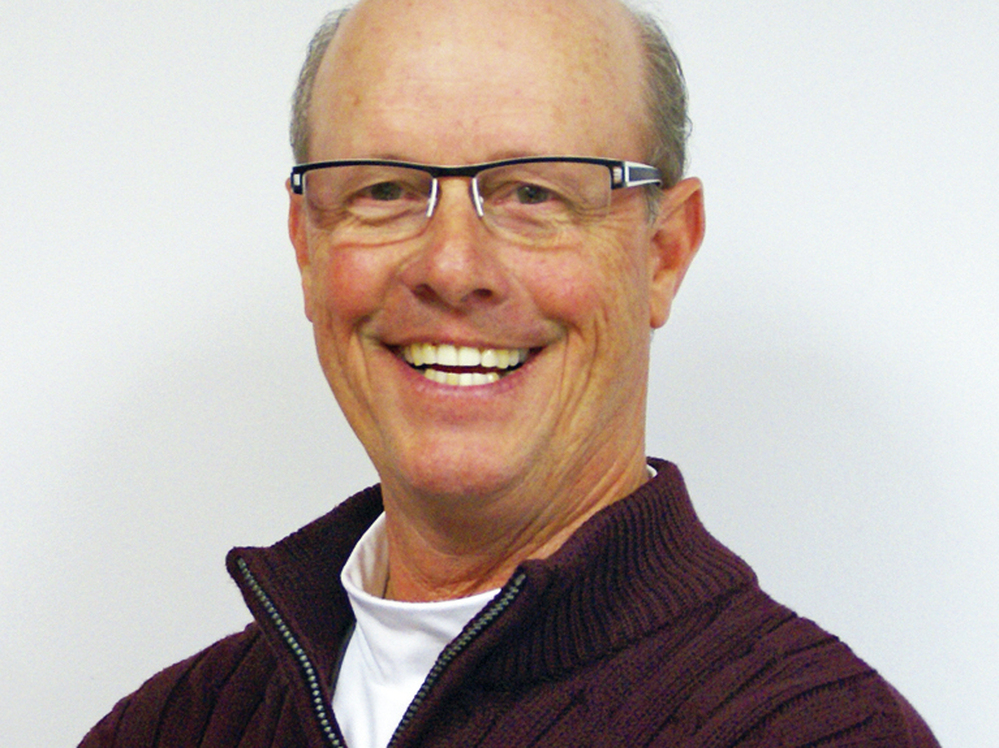 Stephen Prince of Tennessee says the conditions that create wealth are at risk if the rich are too "greedy" to pay more in taxes.Courtesy of Stephen Prince
 Some, like Prince, say they can readily afford to pay more. Others think it's wrong to call on them to pay higher rates — even as top earners account for a huge percentage of personal income tax receipts. Mainly, they say they are tired of being singled out and accused of not paying their fair share.
"I worked hard and I had some success, and I think that's how it's supposed to be in this country," says Edward Kfoury, a 74-year-old former IBM director who now owns "a couple of businesses" in Maine. "I don't like being called a name and being called a bastard and all these other things."
Jeffrey Fisher of Florida says any tax increase ought to be accompanied by cuts to government programs.
Robert J Nelson/Courtesy of Jeffrey Fisher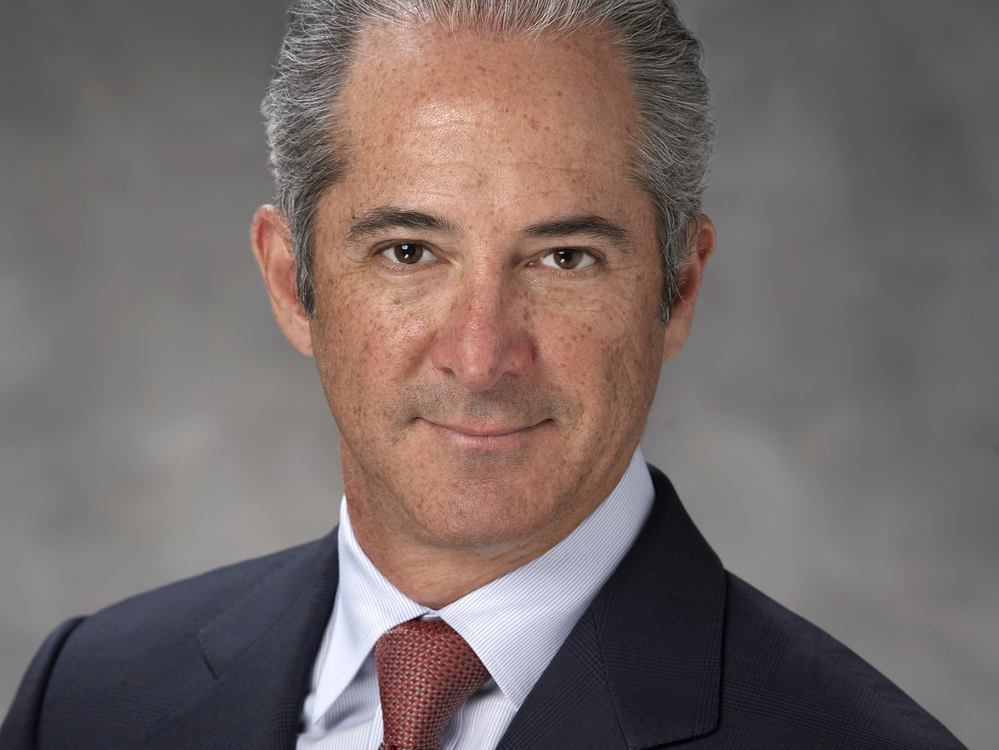 Jeffrey Fisher of Florida says any tax increase ought to be accompanied by cuts to government programs.Robert J Nelson/Courtesy of Jeffrey Fisher
 'A Dark Path'
Prince, who is 61, lives in a gated golf community near Nashville, Tenn., and owns a condo in New York. Not only can he afford to pay more, he says, but he also believes people in his bracket need to pony up to support essential programs such as education and roads.
"Almost all of my friends don't have one mansion, they have two," he says. "Many of them have three."
He recently joined a group of 225 self-styled "Patriotic Millionaires," which advocates that high-income individuals pay higher taxes.
"Without willingness to support our central government, we're going down a dark path," Prince says. The conditions that create wealth — including an educated workforce and a broad customer base — are at risk if the rich are too "greedy" to pay more in taxes, he argues.
How Much Is Enough?
Not everyone whose taxes would go up under President Obama's "fiscal cliff" proposal lives in a mansion, however. Particularly in expensive parts of the country such as New York City and San Francisco, $250,000 doesn't go as far as it once did.
"My wife and I collectively make over that," says Bernie Grimm, an attorney in Washington, D.C., "but with three kids and two in college, that's not a lot of money."
As New York City Mayor Michael Bloomberg once pointed out, life in such places is itself a "luxury product." Grimm, who is 57, readily concedes that his family is able to live comfortably.
People who aren't able to make ends meet on a medium six-figure income are arguably just not being smart with their money.
"There are a lot of people in my income category who are living paycheck to paycheck," says Mark Anderson, a 29-year-old mortgage broker in St. Louis. "It's just a different level of credit card debt."
Mark Anderson of St. Louis thinks President Obama and other Democrats make being rich "sound like a bad thing," something he says is a mistake.
Alan Greenblatt/NPR Mark Anderson of St. Louis thinks President Obama and other Democrats make being rich "sound like a bad thing," something he says is a mistake.Alan Greenblatt/NPR
 Anderson says he and his wife, a pathologist, fall into the 2 percent category but not by much. He indulges himself in "the latest and greatest that Apple has to offer" and lives in a sizable house in a good neighborhood. Beyond that, he says, he and his wife aren't extravagant — they drive Subarus rather than Jaguars.
Singling Out Success
Anderson recognizes that the kind of tax increases Obama proposes aren't going to impinge on his life materially, and he supports them philosophically. But he adds that he thinks Obama and other Democrats make being rich "sound like a bad thing," which he says is a mistake.
The top 2 percent of earners already pay 35 percent of all federal taxes, according to the Tax Policy Center. In terms of personal income taxes, the top 1 percent alone pay 37.4 percent of total receipts, according to the Tax Foundation — double the share they paid back in 1979. Kfoury, who is president of a land trust in Maine, points out that there are years when his personal tax bill has run into seven figures.
"What would make me feel a lot better is if I heard the president say, 'I want to thank the rich people who, because of our progressive tax system, pay the most — but we don't have enough money, so we're asking the wealthy people to help the country out by paying more than their fair share,' " says Martin Krall, a 71-year-old "semi-retired" attorney and media executive who lives in Palm Beach Gardens, Fla.
"Instead, you're made to feel like you're a bad guy," Krall says. "People resent the notion that somehow they've done something wrong by becoming successful."
Get Your Fiscal House In Order
Even Prince, the Tennessee millionaire, says the president "has done a horrible job of telling the story or recrafting the message."
But for some of the well-to-do, it's not just a question of being asked nicely. Some argue that the federal government itself should get its books in better order before it comes asking them for more.
"If you have tax increases and parallel cost-cutting, that's fine with me," says Grimm, the D.C. lawyer.
Grimm says he has always endorsed social programs, worked in a public defender's office and once set up a reading program at a local jail. But he believes there's plenty of waste in government — including domestic programs he worries are leaving some individuals dependent on government largesse.
Jeff Fisher, another 57-year-old lawyer, agrees that any increase in taxes for people in his income category must be accompanied by cuts to government programs. "It's got to be the two together," he says.
But if he has to pay higher taxes in order to help bring the federal budget closer to balance, Fisher recognizes that he can afford it.
"Yeah, it's going to cost me a bunch of money each year, but it's not going to make a material change in my life," Fisher says. "I'm a divorce lawyer in Palm Beach, Fla., so I do very well."
Subscribe to:
Posts (Atom)